Tiny leaves, huge science

Up to 40× the nutrients of a fully grown vegetable.

Microgreens are baby plants harvested just after their first true leaves appear — the moment when their nutritional content is at peak concentration. The USDA has measured nutrient levels 4× to 40× higher than the same plants at full maturity.

4–40×
Nutrient density vs. mature vegetables
USDA · 2012
7–14d
From seed to harvest
Our grow logs
<24h
From harvest to your fridge
Local Montclair runs
100%
Grown without pesticides or herbicides
Indoor, controlled
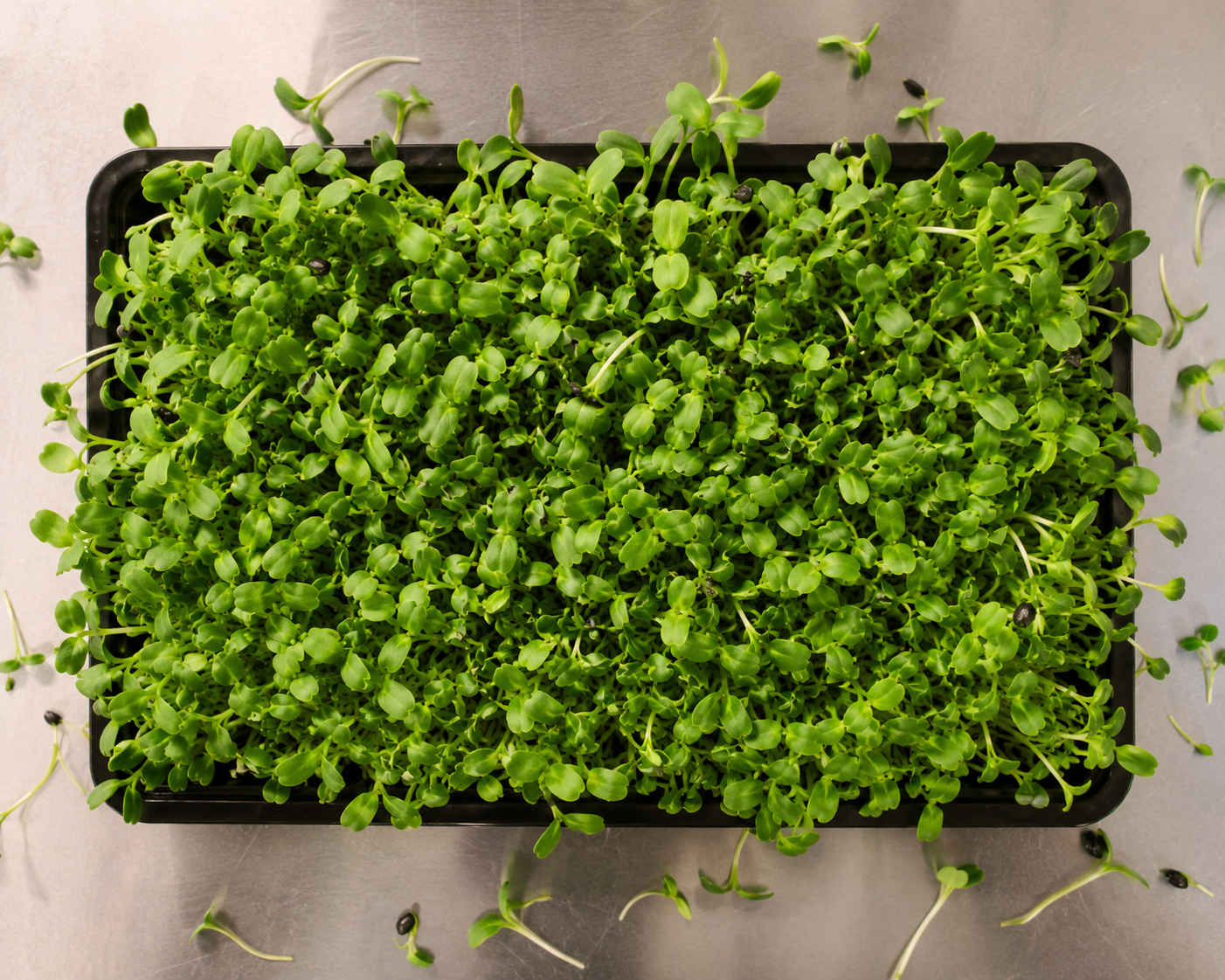
Top-down view of a freshly grown tray of broccoli microgreens at peak harvest
01 · Nutrient density

A baby plant is a vitamin factory in overdrive.

When a seed sprouts, it pours every bit of stored energy into building the first set of leaves. Antioxidants, vitamins C, E, and K, beta-carotene, polyphenols — all of it gets concentrated into a few centimeters of leaf. That concentration drops as the plant grows up.

Translation: a small handful of microgreens can deliver the antioxidant punch of an entire head of mature lettuce. They taste better, too — flavors are sharper, more vivid, and never bitter.
Vitamin C Vitamin K Beta-carotene Polyphenols
02 · Gut health

Sulforaphane & friends — the gut's favorite plant chemistry.

Broccoli microgreens contain up to 100× more glucoraphanin (the precursor to sulforaphane) than mature broccoli. Sulforaphane is one of the most-studied compounds in nutrition science — linked to lower inflammation, healthier gut lining, and a happier microbiome.

Sunflower and pea shoots bring fiber, enzymes, and chlorophyll to the party. Together, they nudge the gut toward the kind of diverse bacterial mix research keeps tying to better digestion, energy, and mood.

Sulforaphane Fiber Chlorophyll Enzymes
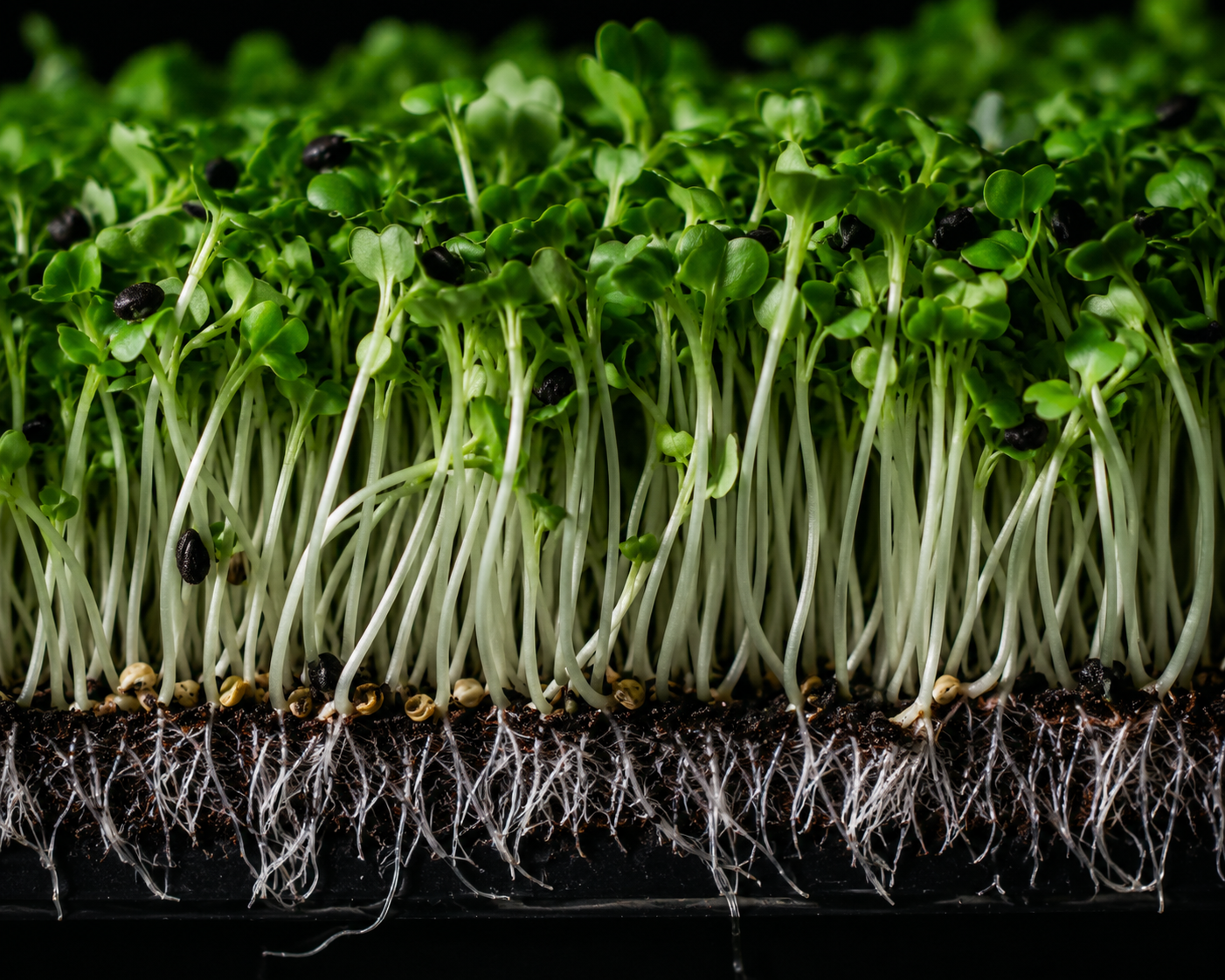
Dramatic close-up cross-section of broccoli microgreens showing roots and stems
03 · Why microgreens beat full-grown vegetables

Same plant. Wildly different math.

It's not magic — it's just timing. Compared to fully mature vegetables, microgreens deliver more nutrition per bite and reach your plate in a fraction of the time.

The mature vegetable

Picked weeks ago. Travels far.
  • 30–90 days from seed to harvest
  • Often 5–14 days from farm to grocery
  • Nutrients diluted as the plant matures
  • Often shipped from another state or country
  • Flavor mellows with age

The microgreen

Cut this morning. Grown two miles away.
  • 7–14 days from seed to harvest
  • Less than 24 hours from cut to your kitchen
  • 4–40× the nutrient concentration
  • Grown indoors in Montclair, NJ
  • Bright, sharp, alive on the plate
How we grow

Built for nutrient density, not shelf life.

Big farms optimize for size and durability so produce survives a long supply chain. We don't have one. So every choice we make — light, water, harvest timing — is pointed at nutrition and flavor instead.

Step 01
Cleanly seeded
Heirloom seeds in compostable hemp mats — no chemicals, no soil-borne surprises.
Step 02
Controlled climate
Temperature, humidity and airflow held steady to mimic a perfect spring morning, 24/7.
Step 03
Optimized light
Full-spectrum LEDs tuned to maximize chlorophyll and antioxidant production.
Step 04
Cut at peak
Harvested the morning we deliver. That's the only way to lock in the nutrients.
Common questions

Quick answers, no science textbook.

Are they like sprouts?

Nope. Sprouts are eaten as just-germinated seeds. Microgreens are slightly older — true leaves, photosynthesis, all that. Different texture, way more flavor.

How do I eat them?

Anywhere you'd use lettuce or herbs. On toast, eggs, sandwiches, pasta, ramen, salads, smoothies. A small handful goes a long way.

How long do they keep?

7–10 days in the fridge in a sealed container with a dry paper towel. Honestly, you'll eat them faster than that.

Try before you buy

Free sample on us.

Text or call — we'll drop a small tray of whatever's freshest. The science is fun. The taste is the convincer.

Text 973-713-4110 See order options